
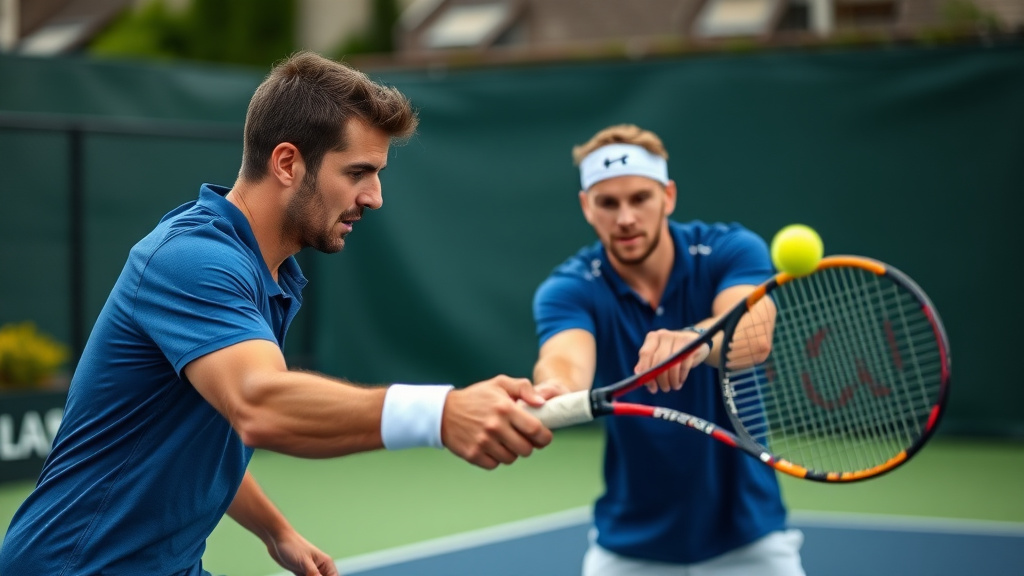
What sets apart Wimbledon champions from the rest of the tennis world? Beyond natural ability and competitive spirit lies a carefully guarded arsenal of coaching techniques that elevate their game to extraordinary levels. In this in-depth examination, we expose the intensive training regimens, innovative practice techniques, and mental preparation strategies utilized by tennis’s top performers. Discover how champions fine-tune their serves, develop lightning-fast court movement, and maintain peak performance in high-pressure situations—insights that reveal why these athletes regularly command the grass courts of SW19.
High-Level Physical Preparation Techniques
Wimbledon champions leverage cutting-edge conditioning methods that go far beyond traditional tennis training. These elite athletes implement periodized training cycles that deliberately rotate between high-intensity intervals and recuperation phases. By adjusting training parameters such as volume, intensity, and duration, players enhance their aerobic fitness and muscle stamina. Sport scientists working with top players have designed personalized conditioning protocols that focus on the specific demands of grass surface competition, helping players sustain explosive power throughout lengthy five-set contests while minimizing injury risk.
Power development represents a key pillar of contemporary Wimbledon preparation, with champions prioritizing movement patterns that enhance court performance. Rather than conventional weight training, these players prioritize compound exercises that strengthen stability, rotational power, and directional agility. Medicine ball throws, explosive drills, and band resistance training develop the movement system essential for explosive serving and quick court adjustments. Coaches meticulously program these workouts to enhance on-court practice, ensuring players build the muscular endurance required to execute challenging strokes reliably during tournament play.
Recovery protocols distinguish champions from competitors, as elite players recognize that improvements happen during rest periods. Tournament-focused athletes employ sophisticated recovery strategies including cold therapy, contrast water therapy, and advanced massage techniques. Optimizing sleep becomes paramount, with top performers following rigorous sleep routines and utilizing sleep monitoring devices to monitor rest quality. These meticulous recovery practices speed up muscular recovery, minimize swelling, and enhance mental clarity—critical factors when playing back-to-back matches across two-week competition schedules.
Range of motion training gets unprecedented attention in contemporary elite competition. Champions commit significant training time to dynamic stretching routines, yoga sessions, and specialized movement drills that sustain maximum movement capability. This forward-thinking method minimizes typical court-related injuries while enhancing mobility performance across the court. By preserving peak mobility, players deliver precision strokes with improved accuracy and decrease inefficient movement compensations that create susceptibility to injury. Integrated flexibility sessions guarantee athletes stay durable throughout grueling tournament schedules.
Specialized athletic conditioning drills mirror competitive pressures with impressive precision, readying elite athletes for competitive demands. Coaches create court-based drills that replicate point-play sequences, motion sequences, and metabolic strain faced during tournament play. Such training utilize interval training principles, alternating high-intensity bursts with short rest intervals that replicate actual match rhythm. By conditioning metabolic pathways in competition-simulated environments, athletes build greater physical resilience and mental toughness essential for navigating pressure-filled moments.
Metabolic testing and biometric monitoring have transformed how elite athletes optimize their conditioning regimen. Elite players undergo routine lactate threshold testing, VO2 maximum evaluations, and body composition measurements to track conditioning progress. Real-time monitoring devices deliver coaches with immediate insights on athlete effort intensity during practice sessions, enabling accurate calibration of workout intensity levels. This evidence-based method removes guesswork, enabling customized training protocols that maximize athletic improvements while preventing overtraining and burnout during important competitive preparation periods.
Psychological Strength and Cognitive Techniques
Mental fortitude separates Wimbledon champions from their opponents. Elite players build psychological systems that allow them to sustain composure during critical moments, converting pressure into performance advantages. Through systematic mental training, champions cultivate unwavering confidence, emotional regulation, and the capacity to bounce back from setbacks rapidly. These psychological methods prove as crucial as physical conditioning, allowing players to perform at their best when stakes are greatest and opponents are strongest.
Visualization and Focus Training
Wimbledon champions employ sophisticated mental imagery methods to mentally rehearse matches before taking to the court. This practice involves vividly envisioning effective shot-making, predicted opponent actions, and different match situations. By regularly visualizing peak performance, athletes enhance brain pathways that support superior execution during actual competition. Champions invest substantial time in mental rehearsal sessions, approaching mental practice with comparable focus and dedication they apply to physical preparation, thereby improving match readiness and competitive confidence.
Focus training represents another foundation of mental conditioning for top-tier tennis competitors. Champions cultivate laser-sharp concentration abilities, eliminating mental distractions and sustaining focused attention on each point. Through meditation, mindfulness exercises, and targeted focus drills, players train their minds to maintain presence and engagement throughout complete matches. This improved mental sharpness allows players to execute quick decisions, adapt their approach, and maintain emotional equilibrium during high-pressure situations on grass courts.
- Breath control manage stress response during high-pressure matches
- Affirmative self-messaging reinforces confidence and mental strength
- Routine development develops mental stability and performance cues
- Competitive pressure practice develops competitive mental resilience
- Practicing mindfulness strengthens present-moment awareness and focus
Sports psychology experts work directly with Wimbledon champions, creating customized psychological approaches matched to personal competitive approaches and mental characteristics. These experts hold frequent consultations analyzing performance data, detecting mental tendencies, and applying focused strategies. Champions maintain detailed mental performance journals recording emotional conditions, attention quality, and psychological triggers across competitive events. This data-driven approach to mental training ensures continuous improvement and peak mental readiness for championship performance.
Court-Specific Skills and Tactical Mastery
Grass Court & Court Mastery
Wimbledon’s grass courts demand specialized training that goes well past standard hard court readiness. Champions dedicate substantial training time to surface-specific training, practicing on actual grass surfaces to grasp how the ball moves differently. The lower friction and faster pace demand modified footwork, refined serving mechanics, and refined approach shots. Elite players examine grass court mechanics in detail, studying bounce variations and flight pattern shifts. This focused court preparation starts several months prior to the tournament, guaranteeing their muscle memory and tactical understanding match precisely with Wimbledon’s distinctive court characteristics and challenging conditions.
Strategic positioning becomes paramount on grass, where court positioning errors result in immediate punishment. Champions develop outstanding predictive abilities through specialized drills that emphasize quick positioning and aggressive net play. Their training includes rapid-response drills and match-like situations specific to grass conditions. Mental preparation centers around adapting to the court’s variable nature while staying calm during rallies. Advanced footage review technology help players identify ideal court positions, court coverage strategies, and footwork effectiveness. This comprehensive approach transforms potential weaknesses into competitive advantages, allowing champions to exploit grass court dynamics while reducing their opponents’ opportunities.
Tactical Serve Development and Placement Precision
The serve constitutes tennis’s most controllable shot, and Wimbledon champions dedicate extensive time perfecting its execution. Their training programs prioritize serve variety, developing different velocity levels, spins, and placements to maintain unpredictability. Champions work on positioning with meticulous accuracy, targeting specific court zones repeatedly until accuracy becomes automatic. Sophisticated technical assessment reveals optimal serving mechanics, optimizing both power and consistency. Training includes match-like conditions mirroring tournament pressure, ensuring serves remain reliable during important situations. This detailed methodology converts the serve into a commanding asset, often winning points outright or establishing favorable positions for follow-up shots.
Tactical serve placement extends beyond simple power delivery, integrating strategic court awareness and opponent analysis. Champions study their opponents’ return patterns extensively, identifying vulnerabilities and tendencies that inform serve placement choices. Training sessions include simulated match scenarios where players practice serve selection based on specific game situations, opponent positioning, and strategic goals. Mental preparation focuses on confidence in serving, allowing players to implement predetermined tactics when facing pressure without hesitation. This advanced method treats serving as a chess-like tactical element rather than merely a stroke, providing champions with reliable edge in competition throughout tournament play.
Net Play Excellence and Volley Mastery
Grass courts reward attacking at the net, prompting Wimbledon champions to build outstanding volleying abilities through intensive specialized training. Their practice regimens include numerous repetitive vollying exercises, developing touch, reflexes, and court awareness essential to net control. Champions practice from multiple distances, refining shot angles, depth placement, and protective positioning. Sophisticated movement exercises improve their ability to reach difficult volleys while keeping their balance and recovery stance. Strategic instruction emphasizes decision-making at the net, teaching players whether to go on offense or stay defensive. This complete volleying command transforms net-level chances into reliable point-winning positions, significantly changing match dynamics benefiting the champions.
Moving from baseline to net demands flawless performance, a skill Wimbledon champions refine continuously throughout their preparation periods. Champions drill approach shots regularly, developing precise shot placement that establishes strong net placement. Training includes footwork patterns that emphasize efficient court coverage while maintaining attacking stance. Mental conditioning focuses on belief during net approaches, empowering players to engage completely to aggressive strategies without hesitation. Advanced analysis systems measure net success rates, pinpointing patterns and development areas. This holistic method transforms net execution from occasional tactical option into a dependable, powerful component of elite players’ match strategies throughout Wimbledon competition.
