
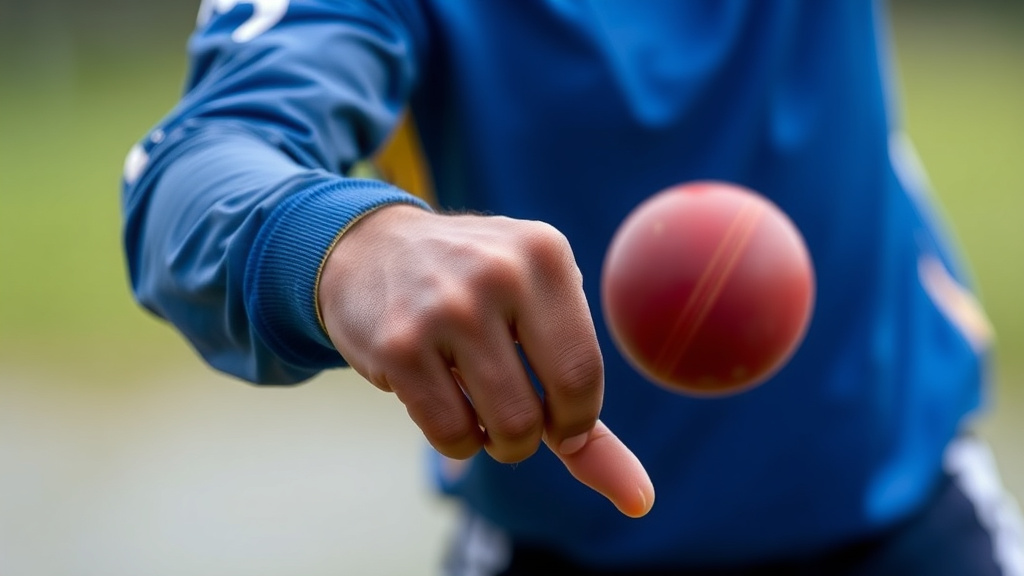
Spin bowling represents one of cricket’s most captivating yet technically demanding disciplines. While pace bowlers depend on raw pace, spin bowlers must perfect the nuanced skill of finger placement and wrist mechanics to trick opposing batsmen. This article examines the essential skills that distinguish professional spinners from casual bowlers, examining how precise finger positioning and consistent wrist rotation produce the revolutions necessary for effective spin. Whether you’re an aspiring cricketer or fan looking to understand more, developing these fundamental skills is crucial to spin bowling effectiveness.
Finger Position and Grasping Basics
The foundation of successful spin bowling begins with understanding how your fingers engage with the cricket ball. The grip you create controls the spin quantity imparted and the direction of ball movement. Your first and second fingers should serve as the main contact areas on the ball’s surface, separated slightly to create the needed grip. The outer fingers provide subtle support, while your thumb sits beneath for balance. This setup lets bowlers generate maximum rotational force while keeping control throughout the release phase.
Achieving the proper finger position requires consistent practice and careful attention to hand positioning. For off-break bowling, your fingers should be placed across the ball’s seam, with the index finger bearing the primary responsibility for creating spin. The middle finger functions alongside, creating the distinctive rotations that result in the ball moving after pitching. Your palm should stay fairly steady but not rigid, permitting natural movement during release. Many emerging spinners encounter initial challenges because they hold the ball with excessive tension, which restricts finger movement and decreases spin quality significantly.
The grip pressure you maintain throughout your bowling action directly influences spin consistency and precision. A moderate grip allows your fingers to move naturally during the critical moment of release, where spin is actually created. Practice developing muscle memory by bowling repetitive deliveries, focusing exclusively on maintaining identical finger positions across several deliveries. Your hand should feel comfortable and relaxed, not tight or uncomfortable. Filming your action and matching it with professional spinners helps identify variations that might undermine your bowling performance and improvement.
Wrist Rotation and Release Mechanics
Wrist rotation serves as the cornerstone of successful spin bowling, shaping ball trajectory and spin rate. The bowler’s wrist must deliver a smooth, regulated motion that begins during the delivery stride and continues through release. This spinning action generates the angular momentum required to impart revolutions on the cricket ball. Consistent wrist action ensures predictable outcomes, allowing bowlers to reproduce shots and sustain accuracy. Elite spinners build muscle memory through intentional repetition, enabling their wrists to execute identical rotations repeatedly, regardless of competitive stress or fatigue.
The release mechanics demand accurate timing and coordination between wrist rotation and finger engagement. As the ball leaves the hand, the wrist must complete its rotational arc while fingers at the same time impart their intended grip pressure. This coordinated movement determines spin axis, velocity, and trajectory characteristics. Bowlers must preserve a stable wrist position throughout the delivery stride, preventing excessive deviation that undermines control. The final finger flick at release enhances spin generation, making the timing of this movement absolutely critical for achieving desired ball behavior on the pitch.
Complex Spinning Techniques and Practice Methods
Mastering sophisticated spin deliveries requires spinners to build upon fundamental techniques while creating specialized deliveries. Skilled spinners combine precise finger placement with consistent wrist rotation to perform intricate spinning techniques like the googly spin, doosra, and carrom delivery. These complex deliveries demand considerable practice time, developing muscle memory, and solid grasp of how minor changes produce significantly different ball movements. Regular practice in match scenarios helps bowlers refine their capacity to conceal deliveries while maintaining precision and command throughout extended bowling spells.
- Film analysis reveals elite bowlers’ finger placement secrets
- Net practice with different field positions improves decision-making
- Bowling machines help build consistent wrist rotation patterns
- Match simulation training builds mental toughness and concentration
- Video feedback sessions accelerate technical skill improvement rates
Systematic training approaches distinguish experienced spin bowlers from part-time practitioners in high-level cricket competition. Implementing structured training regimens that prioritize repeated practice, video study, and escalating complexity promotes sustained technical progress. Collaborating with veteran instructors offers essential guidance on hand positioning and arm technique, identifying subtle flaws that hinder performance. Regular practice against quality batsmen in realistic match scenarios strengthens composure and tactical awareness, allowing bowlers to execute variations effectively under pressure while sustaining accurate finger control and uniform wrist movement required for continued excellence.
